

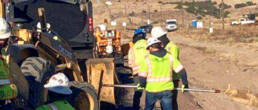
Municipalities in Santa Fe, NM face a unique set of engineering challenges when planning roads, water systems, parks, and other public infrastructure. Shifting soil conditions, tight budgets, public accountability, and strict regulatory requirements often make these projects more complex to coordinate than private development. A single overlooked site condition or missed documentation requirement can turn a straightforward project into a costly delay.
Choosing the right geotechnical and civil engineering partner is often what separates a public works project that stays on schedule from one that runs into change orders, funding complications, or construction rework. In this guide, we walk through what municipal infrastructure engineering involves, the core services cities and counties typically rely on, and what to expect when working with an experienced engineering team from the first site visit through final inspection.
Why Santa Fe Municipalities Need a Geotechnical and Civil Engineering Partner
Public infrastructure projects carry a different level of responsibility than private construction. Cities and counties are accountable to taxpayers, funding agencies, and the public for the safety and long-term performance of every road, utility line, park, and municipal building they approve. That level of accountability means engineering decisions need to be backed by accurate, defensible data rather than assumptions carried over from similar projects elsewhere.
In Santa Fe and the surrounding area, soil composition and site conditions can vary significantly from one part of town to the next, and even across a single project site. Without a proper investigation, municipalities risk approving designs that lead to settlement issues, pavement failures, or drainage problems years after a project is complete. A qualified municipal engineering partner helps identify these risks early, before they turn into expensive change orders during construction or, worse, performance issues after a facility is already in use.
Working with a firm that understands both the technical and regulatory side of public works also helps municipalities move through approvals more efficiently. Grant-funded projects in particular often require detailed reporting, and an experienced engineering team knows how to prepare documentation that holds up to review from funding agencies, city councils, and local building departments alike. That familiarity with the public process can shave weeks off a project timeline compared to working with a firm that primarily handles private development.
Core Engineering Services for Public Infrastructure Projects
Municipal infrastructure work typically draws on several types of engineering support, often on the same project and in overlapping phases. Understanding these services in advance helps public works staff scope a project accurately and avoid gaps between contractors.
- Geotechnical engineering: Site investigations, soil testing, slope stability analysis, and foundation recommendations for roads, buildings, and underground utility infrastructure.
- Civil engineering: Grading plans, drainage design, stormwater management, transportation engineering, and utility layout for site development.
- Laboratory testing: AASHTO-accredited testing of soils, concrete, asphalt, and aggregates to confirm that materials meet project specifications before and during construction.
- Field services: Drilling, pile testing, monitoring wells, and subsurface data collection to support design, permitting, and long-term site monitoring.
- Construction quality control: On-site inspections, special inspections, and documentation to verify that completed work meets code and design requirements.
- Support for innovative and emerging projects: Engineering solutions for renewable energy, technology, and other non-traditional public infrastructure.
Municipalities benefit from working with a single engineering services provider that can handle multiple disciplines under one roof rather than coordinating several separate vendors for the same project. This reduces scheduling gaps between phases, limits miscommunication between contractors, and generally helps keep public project timelines on track from design through completion.
How Municipal Projects Differ from Private Development

Public infrastructure projects follow a different set of rules than private commercial or residential work, and those differences shape how engineering support needs to be structured from the start. Understanding these distinctions ahead of time helps public works staff set realistic expectations with elected officials, funding partners, and the community.
Public Bidding and Procurement Requirements
Many municipal projects are subject to competitive bidding rules and procurement thresholds that do not apply to private development. Engineering scopes and specifications need to be written clearly enough that multiple contractors can bid accurately, which requires more detailed documentation upfront than a typical private project might need.
Public Accountability and Transparency
Because public projects are funded by taxpayer dollars or grant funding, municipalities are often expected to present findings and recommendations at council meetings or public hearings. An engineering partner who can explain technical findings in plain language, without oversimplifying the data, makes that part of the process considerably smoother.
Long-Term Maintenance Considerations
Public agencies typically own and maintain infrastructure for decades after construction is complete, which means design decisions need to account for long-term durability and maintenance costs, not just the lowest upfront construction cost. Engineering recommendations that factor in life-cycle performance tend to serve municipalities better over time than solutions optimized purely for initial budget.
What to Expect When Working with an Engineering Team on a Public Works Project
Public infrastructure projects generally move through a few consistent phases, regardless of size or scope. Knowing what to expect at each stage helps public works staff plan internal reviews and budget approvals around the engineering timeline.
Initial Consultation and Project Review
The process typically starts with a review of the project scope, site conditions, and any funding or regulatory requirements tied to the work. This early step helps set realistic expectations for both timeline and budget, and it often shapes how the rest of the investigation is scoped.
Site Investigation and Data Collection
Field crews collect subsurface data through drilling, soil sampling, and other field service methods appropriate to the site and project type. This information forms the technical basis for engineering recommendations and design decisions later in the process, so accuracy at this stage matters more than speed.
Design, Permitting, and Construction Support
Using the collected data, engineers develop grading, drainage, and structural recommendations tailored to the specific site conditions. Once construction begins, ongoing inspections and materials testing confirm that the work in the field matches the approved design and meets applicable codes and specifications.
Common Infrastructure Challenges Across Santa Fe and the Region
Public works departments across Santa Fe and the broader region tend to run into a similar set of obstacles when planning infrastructure projects, regardless of the specific type of work involved.
- Variable soil conditions: Soil type and bearing capacity can change significantly across a single project site, which is why thorough investigation before design begins is so important for roads, foundations, and utility trenches alike.
- Drainage and stormwater management: Public roads and facilities need stormwater and drainage planning that accounts for local rainfall patterns, existing infrastructure capacity, and long-term maintenance needs.
- Aging infrastructure integration: New construction often has to tie into existing utilities, roadways, and drainage systems that were not designed with current capacity needs in mind, which adds complexity to both design and permitting.
- Documentation for funding agencies: Grant-funded projects require detailed reporting that meets the standards of state and federal funding sources, and gaps in documentation can delay disbursement of funds.
- Coordination across multiple stakeholders: Public projects often involve input from city councils, planning departments, and community members, which means engineering recommendations need to be communicated clearly to non-technical audiences.
- Balancing cost with long-term performance: Public budgets are often fixed well in advance, which makes it important to identify potential site issues during the investigation phase rather than discovering them mid-construction, when change orders are far more expensive.
Addressing these challenges early in the planning process, rather than after design work is already underway, tends to save municipalities both time and money over the full life of a project. In our experience, the projects that run most smoothly are the ones where a thorough investigation happens before design decisions are finalized, not after.
Benefits of an Integrated, In-House Engineering Approach
Many municipalities find that working with a firm that handles geotechnical engineering, civil design, laboratory testing, and quality control in-house offers real advantages over piecing together separate vendors for each phase of a project.
An in-house lab and drill rig fleet, for example, means testing results can move faster since samples do not need to be shipped out or scheduled around a third-party provider’s availability. It also means fewer handoffs between teams, which reduces the chance of miscommunication or gaps in data as a project moves from investigation to design to construction. When one firm manages the full process, there is also a single point of accountability if questions come up during a public meeting or funding review.
For public agencies with limited staff capacity, having a single point of contact who understands the full scope of a project, from the first site visit through final inspection, can make a noticeable difference in how smoothly a project runs and how confident staff feel presenting recommendations to elected officials. Learn more about our approach and licensing on our about page.
Quick Checklist for Choosing a Municipal Engineering Partner
Before selecting an engineering firm for your next public infrastructure project, it helps to confirm whether a potential partner offers:
- Licensing and direct experience with public works and municipal projects, not just private development
- In-house geotechnical, civil, and laboratory testing capabilities under one roof
- A track record of supporting grant-funded or publicly bid projects and their reporting requirements
- Clear communication and responsive turnaround on testing results and reports
- Familiarity with local soil conditions and regulatory requirements specific to your area
- The ability to support a project continuously from initial investigation through construction close-out
Running through this list early in the vendor selection process can help public works staff avoid mid-project delays and identify a partner capable of supporting the full life of the project rather than just one phase of it.
Ready to Move Your Santa Fe Infrastructure Project Forward?
Public infrastructure projects deserve engineering support that is accurate, responsive, and easy to coordinate with across every phase of the work. Our team brings in-house geotechnical, civil, laboratory, and field service capabilities to municipal projects throughout Santa Fe and the surrounding region, helping public agencies move from early planning to construction close-out with fewer delays and more confidence in the data behind their decisions.
If your municipality has an upcoming infrastructure project, we would welcome the opportunity to discuss your scope and timeline. Request a Consultation with our team today to get started.
Need Engineering Support for Your Project?
Jesik Consulting & Engineering works with municipalities, utilities, and developers to deliver accurate data, efficient design, and dependable results. Connect with our team to discuss your project requirements.
Like this article? Spread the word!
Related Posts
Good Engineering Isn’t About Spending More Money
Good engineering balances safety and budget. See how cost-effective engineering protects…
Soil & Compaction Testing 101: What Contractors Need to Know Before Pouring
Learn how soil compaction testing works, from Proctor targets to field density tests, and…
How to Prepare a Site for Civil Engineering and Grading Work
Learn how to prepare a site for civil engineering and grading, from soil testing to…