

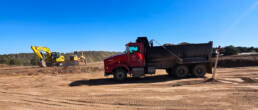
Whether you manage a municipal infrastructure program, develop commercial property, or build projects for a living, every construction dollar matters. Municipalities are entrusted with taxpayer funds. Developers have to protect project returns. Contractors are expected to deliver quality work on budget and on schedule.
Yet one of the most common assumptions in construction is that the most conservative engineering recommendation is automatically the best one. In our experience, that is rarely true. The best engineering solution is the one that safely meets the project’s objectives while making the most effective use of the available budget. As a firm based in Pueblo and working across Southern Colorado, we see every day that engineering excellence and fiscal responsibility are not competing priorities. The strongest projects achieve both.
The Difference Between Designing a Project and Engineering One
Almost anyone can design a project that works if cost is no object. Deeper foundations, larger retaining structures, thicker pavement sections, extra excavation, wholesale soil replacement, and stacked layers of conservatism will usually perform. The problem is that each of those choices carries a price tag, and the owner pays for all of them whether they were truly needed or not.
That is not where engineering creates value. The real work lies in understanding site conditions, evaluating alternatives, managing risk, and deciding what is actually necessary to achieve long-term performance. Our geotechnical and geological engineering work starts from that question rather than from a default list of worst-case fixes.
Put simply, overbuilding a project to meet technical requirements is easy. Achieving the same performance at a cost the owner can actually afford takes judgment, data, and experience. That is the difference between producing a design and practicing engineering.
This distinction shows up throughout a project. A pavement section can be sized to the traffic it will really carry instead of a generic worst case. A foundation recommendation can reflect the bearing capacity measured on site instead of an assumed value padded for uncertainty. A drainage approach can be matched to the actual grading and runoff patterns rather than oversized by habit.
None of these choices compromise safety. They simply replace guesswork with knowledge, which is exactly what owners should expect when they hire an engineer. Cost-effective engineering solutions are not about cutting corners. They are about applying expertise so the project gets the right solution instead of the biggest one.
Fiscal Responsibility on Public and Private Projects in Southern Colorado
Fiscal responsibility looks a little different depending on who owns the project, but the principle is the same. Every dollar spent where it is not needed is a dollar that cannot be spent where it is. Here is how that plays out for the three groups we work with most often.
For Municipalities and Public Agencies
For public agencies, fiscal responsibility is more than a goal. It is an obligation to the community. A cost-effective roadway design may free up funding for additional street improvements. An optimized utility project may leave room in the budget for the next round of upgrades. Our engineering services for municipalities and public works are built around helping agencies stretch limited budgets further while still delivering safe, reliable infrastructure. Good engineering protects both the infrastructure and the taxpayer dollars that pay for it.
For Developers
Developers live and die by project feasibility. Unnecessary earthwork, oversized foundations, or overly conservative pavement recommendations can erode margins quickly and even push a viable project past the point where it pencils out. Site-specific engineering recommendations help protect project economics from the start.
For Contractors
Contractors need recommendations that are practical to build. Designs that ignore constructability add time, equipment, and labor, all of which show up in bids and change orders. Clear, buildable recommendations keep crews productive and schedules intact. They also reduce the back-and-forth that slows approvals and frustrates everyone involved.
In every case, engineering recommendations must prioritize public safety, regulatory compliance, and long-term performance. They should also recognize the reality of limited budgets and competing priorities. Readers working on public projects in New Mexico can see how these principles apply in our guide to municipal infrastructure engineering in Santa Fe.
Why the Most Expensive Recommendation Isn’t Automatically the Best Value
Many owners assume that a larger or more conservative recommendation automatically delivers more value. It feels safer. It sounds more thorough. But conservatism applied without a clear reason is not the same as good engineering, and it can quietly consume a significant share of a construction budget.
Sound recommendations should rest on four things: site-specific conditions, testing data, performance history, and professional judgment. When any one of those is missing, engineers tend to fill the gap with extra margin. That margin costs money, and it often provides little meaningful benefit. The more complete the data, the less an engineer needs to guess about soil strength, groundwater, or material quality, and the more confidently the design can be sized to what the site actually requires.
That is why thorough investigation up front is one of the best investments an owner can make. A well-planned subsurface exploration often pays for itself many times over by replacing assumptions with real information. We cover this in more depth in our post on geotechnical site investigations in Southern Colorado.
The most successful projects are not the ones with the highest construction costs. They are the ones that manage risk appropriately while avoiding unnecessary construction costs. A practical solution that safely meets every project requirement is usually a better outcome than one that drives up the budget without a measurable gain in performance.
This matters more now than ever. Construction costs continue to rise, budgets keep tightening, and municipalities, developers, and contractors all face growing pressure to maximize project value. Value engineering is not a luxury in this environment. It is a necessity.
How Local Experience With Colorado Soils Helps Control Construction Costs
One major advantage of working with an engineering firm that has decades of experience in Southern Colorado is knowing how local soils, geology, and infrastructure actually perform over time. Engineers who work in the region every day build knowledge that reaches well beyond any single boring log or lab result.
Over years of local practice, experienced engineers learn:
- Which soil conditions routinely perform well with modest measures
- Which conditions tend to create long-term maintenance problems
- Which mitigation measures are truly effective in the field
- Where risks are commonly overstated, leading to overdesign
- Where risks are commonly underestimated, leading to future repairs
- How similar facilities have held up over decades of service
That perspective helps separate situations where substantial corrective work is truly warranted from situations where a more practical approach achieves the same performance objectives. The difference between those two paths can have a major impact on project cost.
Local knowledge does not replace analysis. It strengthens it. Our AASHTO-accredited laboratory testing and in-house drilling give us reliable, project-specific data, and regional experience helps us interpret that data in context. Knowing which results call for action and which fall within the normal range for the region keeps recommendations proportionate to the real risk. If you are early in planning, our guide to soil testing before you build in Colorado explains what to expect.
That combination is valuable whether a project sits in the Arkansas Valley or farther west, where our team also supports owners through our engineering services in Durango.
The Cost of Being Wrong Goes Both Ways
Good engineers must avoid two equally important mistakes. The first is under-designing a project and creating future performance problems. The second is over-designing a project and asking the owner to spend money that delivers little or no meaningful benefit.
Conversations about engineering risk tend to focus only on the first mistake. That makes sense, because failures are visible and expensive. But overdesign has real costs too. It just spreads them out more quietly, through inflated bids, longer schedules, deferred projects, and budgets that could have gone further. For a public agency, an overdesigned project can mean a neighborhood waits another year for street repairs. For a developer, it can mean a project never moves forward at all.
The best engineers keep both risks in view at the same time. A successful project is not simply one that survives. It performs as intended, stays within budget, minimizes future maintenance, and delivers long-term value to the owner. Achieving that balance requires engineering judgment, practical experience, and a genuine commitment to fiscal responsibility.
The balance does not end when design is complete. Verification during construction confirms that field conditions match what was assumed and that the work meets specifications. Our construction quality control and assurance services help catch issues early, when adjustments are still simple and affordable, rather than after they become costly corrections.
Good preparation on the front end helps as well. Our article on how to prepare a site for civil engineering and grading work outlines steps that keep early decisions aligned with both performance and budget.
Questions to Ask Before Approving Engineering Recommendations
When reviewing engineering recommendations, owners should ask more than “Will this work?” These questions often reveal the difference between a generic recommendation and an optimized engineering solution. A good engineering partner will welcome them and answer each one clearly:
- Is this recommendation based on actual site conditions and testing data?
- Were reasonable alternatives evaluated and compared?
- Is the recommendation practical and constructible?
- What is the cost impact of this approach compared with the alternatives?
- Does local experience support this solution?
- Is there a more cost-effective way to achieve the same performance?
- Does this recommendation represent the best value for the project?
Our responsibility goes beyond designing projects that meet minimum requirements. It is to help clients make informed decisions that balance performance, risk, constructability, longevity, and cost. You can learn more about how our team approaches that work on our About page. The goal is never to build the biggest solution. It is to build the best one for your site, your schedule, and your budget.
Request a Consultation for Practical, Cost-Effective Engineering in Colorado
Great engineering is not measured by how much a project costs. It is measured by how effectively the project achieves its purpose. For municipalities, that means being responsible stewards of taxpayer dollars. For developers, it means protecting project economics. For contractors, it means recommendations that can be built efficiently.
If you are planning infrastructure, site development, or a public works project in Pueblo or anywhere in Southern Colorado, we are ready to help you find the right solution for your site and your budget. Request a Consultation with Jesik Consulting & Engineering today, and let’s talk about how practical, site-specific engineering can deliver more value for your next project.
Need Engineering Support for Your Project?
Jesik Consulting & Engineering works with municipalities, utilities, and developers to deliver accurate data, efficient design, and dependable results. Connect with our team to discuss your project requirements.
Like this article? Spread the word!
Related Posts
October 2, 2026
How to Prepare a Site for Civil Engineering and Grading Work
Learn how to prepare a site for civil engineering and grading, from soil testing to…
November 24, 2026
Jesik Consulting & Engineering Provides Geotechnical Engineering for Pueblo’s New Alebrije Sculpture
Jesik Consulting & Engineering provided geotechnical engineering for Pueblo's new…
November 1, 2026
Soil & Compaction Testing 101: What Contractors Need to Know Before Pouring
Learn how soil compaction testing works, from Proctor targets to field density tests, and…